Colorful Tiger Face: A Designer’s Real-World Review
First Impressions: Bold, Playful, and Instantly Recognizable
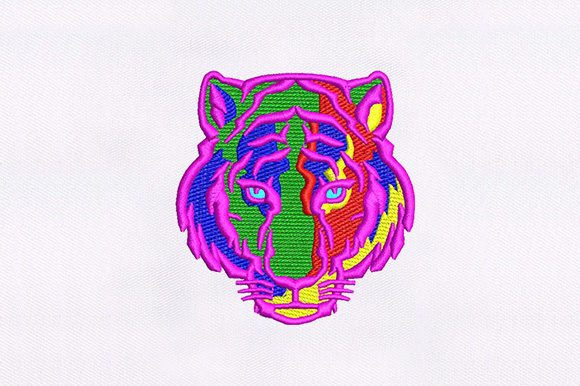
When I opened Colorful Tiger Face for the first time, I didn’t just see a wild animal embroidery design—I saw personality. It’s not a photorealistic portrait or a minimalist line art piece. It’s a joyful, stylized jungle cat with expressive eyes, layered fur textures, and vibrant color zones that beg to be stitched in high-contrast thread. The shape sits comfortably within a circular or slightly oval boundary—ideal for hoops, patches, and centered placements on towels, tote bags, and baby onesies. As a designer who regularly selects embroidery files for client work and small-batch production, I immediately sensed its versatility: it reads well at 3.5”–4.5”, holds charm even when scaled down to 2.75” for cap fronts, and doesn’t rely on tiny details that vanish after stitching.
A Real Project Test: Embroidering a Linen Tea Towel for a Boutique Kitchen Line
Last week, I used Colorful Tiger Face on a natural linen tea towel for a local craft boutique’s spring collection. Why this design? Because it balances whimsy and sophistication—perfect for a handmade product meant to sit beside artisan ceramics and hand-poured candles. I chose medium-weight cutaway stabilizer (not tear-away) to support linen’s subtle slub and prevent puckering around the tiger’s cheek contours. Thread colors popped beautifully against the off-white fabric: burnt orange for the stripes, deep teal for the inner ear, and creamy yellow for highlights. The satin stitch around the outer face edge held crispness, while the fill stitches in the fur created gentle dimension—not too dense, not too sparse. Customers responded instantly: “It makes me smile every time I dry my hands.” That’s the kind of emotional resonance that turns a simple embroidered towel into a repeat-purchase item.
Where It Shines—and Where to Pause
Colorful Tiger Face thrives in contexts where character matters more than strict realism. It works exceptionally well on:
- Custom apparel: Sweatshirt embroidery (especially on midweight fleece), crewneck tees, and unisex hoodies—the bold shapes translate cleanly even on textured knit surfaces.
- Personalized gifts: Baby embroidery on organic cotton burp cloths or nursery pillow covers; holiday embroidery on felt ornaments or velvet stockings.
- Small shop products: Embroidered patches for denim jackets, aprons for bakeries or florists, and tote bag designs for eco-conscious brands.
- Digital embroidery file use: As part of an Etsy seller’s seasonal bundle (think “Wild & Whimsical Nursery Set”) or as a standalone digital download with printable mockups for social media previews.
That said, proceed thoughtfully with:
- Thin or stretchy fabrics: Lightweight jersey or rayon challis may need additional topping stabilizer to keep satin-stitched eyes from sinking or distorting.
- Curved surfaces: Caps and beanies require careful digitizing adjustments—check whether your version includes underlay or reduced density in curved zones before hooping.
- Dark fabric backgrounds: Some lighter thread colors (like pale yellow highlights) may need a second pass or tone-on-tone blending for visibility—always test in black-and-white mockups first.
- Frequent-wash items: While the stitch density feels balanced, avoid placing it directly over high-friction seams (e.g., elbow patches on kids’ sweatshirts) unless you’ve confirmed durability through wash testing.
Design Integrity Meets Commercial Practicality
What sets Colorful Tiger Face apart isn’t just its visual appeal—it’s how thoughtfully it functions as a machine embroidery design. The eye details are large enough to avoid thread breaks but detailed enough to convey expression. There’s no excessive underlay cluttering the inner ear or nose area, which means cleaner starts/stops and less chance of thread nests on home embroidery machines. As a craft business owner, I value that efficiency: fewer trims, fewer restarts, more consistent finished product quality across batches.
For Etsy sellers and small shop owners, this design supports brand consistency without limiting creativity. Pair it with neutral typography for a modern nursery line, or layer it with floral motifs for a boho summer collection. Its wild-animal theme fits naturally within broader categories like Wild Animals, yet it avoids cliché—it doesn’t feel like clipart. That authenticity builds customer trust. When buyers see Colorful Tiger Face on your listing, they’re not just buying an embroidery file—they’re investing in a handmade product with intention and joy baked in.
Designer Notes You’ll Actually Use
Before stitching Colorful Tiger Face into your next project, here’s what I recommend—based on three real production runs:
- Test on scrap fabric first, especially if using textured weaves or blends. Linen, terry cloth, and brushed cotton all behave differently under needle pressure.
- Review stitch density visually—zoom in on your embroidery software. Look for tight clusters near the tiger’s whisker lines or inner ear curves. If they appear overly dense, consider lightening the fill or adjusting underlay.
- Confirm hoop size compatibility. This design fits standard 4”x4” hoops comfortably—but if you’re working with smaller hoops (e.g., 3.5” round), check scaling options and ensure key features (like the eyes) remain legible.
- Inspect small details manually. Are the stripe ends tapered? Do the cheek highlights stitch cleanly as satin columns, or do they feather unpredictably?
- Try black-and-white mockups to assess contrast balance—especially important if offering both light and dark fabric versions.
- Use proper stabilizer: Medium cutaway for stable wovens, lightweight fusible for knits, and tear-away + topping for napped fabrics like terry.
- Verify licensing before selling finished items or bundling the digital embroidery file commercially. Not all Wild Animals-themed designs include small business rights by default.
The Final Stitch
Colorful Tiger Face isn’t just another embroidery file—it’s a confident, cheerful design asset that earns its place in real-world projects. Whether you’re embroidering a personalized gift for a tiger-loving toddler, building a cohesive line of boutique kitchen textiles, or expanding your Etsy shop’s seasonal offerings, this design delivers visual impact without compromising practicality. It invites playfulness but executes with professionalism. And in today’s handmade market—where customers choose authenticity over perfection—that balance is everything.