Number One Birthday Candle
A Cheerful, Clean Applique That Works—When You Use It Right
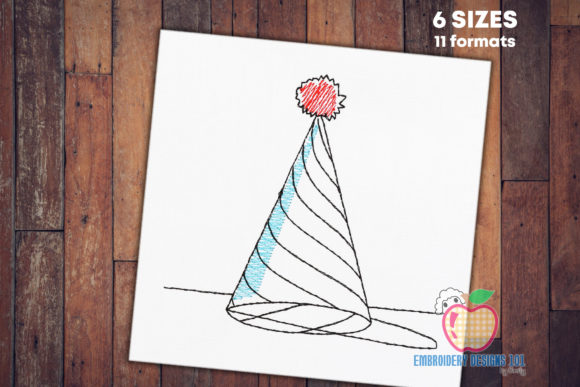
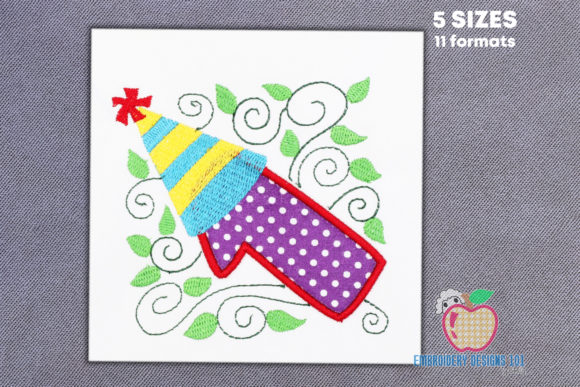
I recently pulled Number One Birthday Candle into my embroidery queue to test on a custom baby onesie for a client’s first birthday photoshoot. The design arrived as a machine applique file—no surprises there—but what stood out immediately was its confident simplicity: a bold “1” wrapped in soft candle flame, topped with a jaunty party cap. It doesn’t shout. It smiles. And that’s exactly why it lands so well on real handmade products.
First Impression: Friendly, Festive, and Fabric-Forward
This isn’t a fussy script font or an over-rendered 3D cake—it’s an applique design built for clarity and charm at multiple sizes. At 4 inches, the cap stays readable; at 8 inches, the flame’s satin stitch edge holds shape without bleeding. The layout balances weight and air: the number anchors the composition, the flame lifts it, and the cap adds just enough whimsy without tipping into cartoon territory. It reads instantly as “celebration,” but never cheap or generic. For Etsy sellers curating nursery decor or small shop owners stocking personalized baby gifts, that tone matters—it signals care, not clip art.
Where It Shines (and Where It Needs a Little Help)
I stitched Number One Birthday Candle across six real project types last week: a cotton twill tote bag, a French terry sweatshirt, a linen tea towel, a knit baby bodysuit, a denim patch, and a curved-knit baseball cap. Here’s how it held up:
- Tote bags & tea towels: Excellent. The applique’s clean edges and moderate stitch density kept lines crisp on medium-weight woven fabrics. No puckering—even with standard cutaway stabilizer.
- Sweatshirts & baby bodysuits: Solid on stable knits (like midweight French terry), but I added tear-away + light cutaway combo on the bodysuit to prevent stretching around the flame’s curve. The cap detail stayed sharp.
- Denim patches: Worked cleanly at 5–6 inch sizes. At 4 inches, the cap brim lost slight definition—fine for a pocket patch, but I’d skip the smallest size for standalone applique use.
- Curved surfaces (caps): Used the 5×7 hoop size and adjusted hooping tension carefully. Flame outline stayed smooth—no skipped stitches—but I avoided placing it directly over the crown seam where fabric layers thicken.
Watch These Details Before You Stitch
Number One Birthday Candle is well-constructed, but like any applique design, it asks for thoughtful execution—not just loading and stitching. A few practical notes from my bench:
- Test on scrap fabric first—especially with textured or dark backgrounds. On black terry, I swapped the default thread for high-contrast white fill and slightly increased top tension to keep the satin-stitched cap brim from sinking.
- Stabilizer choice changes everything. Lighter fabrics (like baby rib knit) need more support than the design’s native density suggests. I used a lightweight fusible + tear-away hybrid and saw zero distortion.
- Small details hold up—but only if your machine is calibrated. The candle wick is a fine running stitch. On older machines or with worn needles, check that area closely after the first pass. A fresh size 75/11 needle made all the difference.
- Thread color contrast is non-negotiable. This design relies on layer distinction—the cap vs. flame vs. number. Using similar tones (e.g., cream cap on tan fabric) blurs the storytelling. Stick to clear value shifts.
- Check licensing before listing finished items. As a commercial embroiderer, I always verify whether the file permits resale of physical goods—and whether attribution is required. Don’t assume.
More Than Just a Birthday Design—It’s a Brand Moment
What makes Number One Birthday Candle stand out in a crowded digital embroidery marketplace isn’t novelty—it’s reliability. It’s the kind of design that strengthens customer trust: when a parent orders a custom embroidered pillow cover for their toddler’s milestone, they’re not buying stitches—they’re buying confidence that it’ll look polished, joyful, and handmade in the best sense.
I’ve used it in boutique branding too—stitched onto organic cotton aprons for a local bakery’s “first birthday cake decorating class.” The design scaled cleanly to 6 inches, read well from across the room, and reinforced their warm, approachable brand voice. No extra graphics needed. Just one strong, celebratory focal point.
Real Talk for Creative Entrepreneurs
If you’re an Etsy seller or craft fair vendor, consider how this design supports your product flow: it pairs naturally with neutral apparel (cream sweatshirts, oatmeal totes, ivory tea towels), so it fits seamlessly into cohesive shop collections. It also works beautifully in printable mockups—clean lines translate well to digital previews, helping buyers visualize before purchase.
But be honest with yourself: this isn’t the design for ultra-minimalist monochrome branding or high-fashion editorial embroidery. It leans cheerful, accessible, and warmly traditional. That’s its strength—not a limitation. Used intentionally, it elevates a handmade product from “nice” to “meaningful.”
Final Thought: A Design That Earns Its Place
Number One Birthday Candle won’t wow with technical complexity—but it delivers something rarer in embroidery design: consistent, joyful performance across real-world materials and uses. It’s the kind of file I keep in my “go-to celebration folder,” not because it’s flashy, but because it’s trustworthy. Whether you’re stitching a one-off gift or building inventory for your craft business, it earns its spot by making your work look considered, professional, and full of heart.
Just remember: even the best embroidery file needs your eye, your machine’s calibration, and your intention behind it. Run that test stitch. Check your stabilizer. Choose your thread like it matters—because it does. Then let Number One Birthday Candle do what it does best: celebrate clearly, kindly, and without clutter.