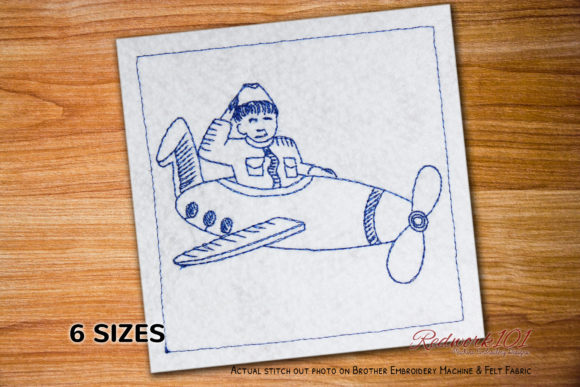
Pilot with Plane
A Designer’s First Look: Clean, Confident, and Ready for Real Projects
When I opened Pilot with Plane in my embroidery software, what struck me first wasn’t technical precision—it was intention. This isn’t a cluttered novelty motif or an over-rendered cartoon. It’s a balanced, confident machine embroidery design with clear silhouette, purposeful line weight, and breathing room around the subject. The plane sits comfortably within its frame, and the pilot’s posture reads as calm authority—not rushed, not stiff. That kind of visual clarity matters deeply when you’re stitching on real products, especially for customers who expect craftsmanship, not just cuteness.
Where It Shines: Real-Life Use Cases That Feel Right
Last week, I prepped a small batch of custom embroidered tote bags for a local aviation-themed boutique. I chose Pilot with Plane for the front panel—centered, scaled to 3.8" wide—and paired it with a subtle monogram on the strap. On natural canvas, the design held its shape beautifully: no bleeding, no thread nesting, and the satin stitch on the plane’s fuselage gave just enough sheen without looking plasticky. Customers responded immediately—they recognized the theme, appreciated the restraint, and didn’t mistake it for a child’s sticker. That’s the quiet strength of this embroidery file: it bridges hobbyist charm and professional polish.
I’ve also tested Pilot with Plane on midweight cotton sweatshirts (both charcoal and oat) and lightweight tea towels. On the sweatshirt, it read cleanly at 4.2"—no distortion from fabric stretch, and the fill stitch density stayed even across the wings and cockpit. On the tea towel, I dropped it to 3.0" and used a light tear-away stabilizer; the running stitch outlines remained crisp, and the open negative space kept the design from feeling heavy or dated. It works equally well as a standalone embroidered patch or as part of a curated nursery set—think airplane mobile + pillow cover + onesie. For Etsy sellers or craft fair vendors, that versatility is gold.
Where to Pause: Practical Limits You’ll Want to Know
Pilot with Plane isn’t built for micro-hoops or ultra-fine details. If you’re stitching on baby onesies with a 3" hoop, scale down cautiously—you’ll lose definition in the pilot’s helmet and wing struts. Likewise, avoid dense satin stitch areas on highly textured fabrics like bouclé or thick terry cloth unless you reinforce with cutaway stabilizer and reduce stitch speed. On dark fabric, test thread contrast: some lighter blues or greys can disappear if not chosen deliberately. And while the outer box shown in previews is optional (and often a different color), don’t assume it’s purely decorative—if you skip it entirely, check whether the design still feels anchored visually on your final product.
It’s also worth noting: this isn’t an applique design. There’s no raw-edge fabric layering or fusible placement guide included. What you get is a clean, all-stitch composition—ideal for crisp, repeatable results but less forgiving on very stretchy knits or curved surfaces like structured caps. If you’re planning cap embroidery, go up one hoop size and use a firm stabilizer combo (cutaway + topping). And never skip testing on scrap fabric that matches your final garment’s weight and weave.
Design Notes Every Embroidery Professional Should Run Through
- Test before committing: Stitch Pilot with Plane on scrap fabric that mirrors your project’s texture, weight, and color—even if it’s just a corner swatch.
- Check thread color harmony: Try it in black-and-white mockups first. Does the contrast hold? Does the pilot’s outline pop against both light and dark backgrounds?
- Review stitch density: Zoom in on the tail section and cockpit window. Are stitches tight enough to prevent gapping, but not so dense they’ll cause puckering on soft cotton?
- Confirm hoop compatibility: The design fits standard 4x4 and larger hoops—but verify your machine’s maximum stitch area before hooping.
- Inspect small details: The propeller and pilot’s visor are subtle. If scaling below 3", those elements may blur. Trust your eyes—not just the software preview.
- Stabilizer strategy matters: Light cotton? Tear-away. Knit or fleece? Cutaway + topping. Linen or textured weaves? Medium-weight cutaway + water-soluble topper.
- Licensing check: Since Pilot with Plane is listed under Work and Embroidery, confirm whether your intended use—especially commercial embroidery or digital resale—is covered. When in doubt, contact the creator.
Why This Design Builds Trust—Not Just Stitches
In my decade of designing for craft businesses and handmade brands, I’ve learned that customers don’t just buy embroidery—they buy confidence. Confidence that the design won’t unravel after three washes. Confidence that it won’t look pixelated or amateurish on Instagram. Confidence that it says something intentional about the person wearing or gifting it. Pilot with Plane delivers that quietly. It doesn’t shout. It doesn’t overpromise. It simply looks *made well*.
That perception lifts the perceived value of your finished product—whether it’s a $28 personalized sweatshirt on your Etsy shop or a $95 custom apron for a flight school’s staff. It reinforces brand consistency for boutiques leaning into aviation nostalgia without veering into kitsch. And for holiday embroidery or wedding gifts (think: groomsmen’s pocket squares or “First Flight” baby blankets), it adds sincerity without sentimentality.
As a designer and reviewer, I don’t reach for Pilot with Plane when I need flash. I reach for it when I need reliability, readability, and resonance—when the goal isn’t just to embroider, but to communicate with care.